

Renovating a house in Dubai can be very exciting, but the budget is often the major issue. You’ll probably want a modern kitchen, better flooring, more stylish bathrooms and more storage. The problem is that if you’re trying to do it all at once, you can very quickly blow the budget.
The key is knowing where you can afford to spend more and where you can actually get away with a more modest approach. In home renovation, some tasks are essential, while others are done purely for decorative purposes. Getting the right balance will allow you to create a really comfortable home without having to spend more.
Where Should You Spend More?
1. Plumbing, Electrical Work and Waterproofing
Don’t cut costs on plumbing, electrical and water pipe work. It may not seem like a big issue at first, but you regret it later.
In plumbing work, low-quality pipes will not last long. Also, for electrical work, poor-quality wires can easily short-circuit. A good home is not just about looks; the interior design and layout must also be well-planned.
A home renovation, especially for a bathroom, needs particular attention. Proper waterproofing, reliable plumbing connections, and good-quality fittings are worth the investment.
2. Kitchen Cabinets and Worktops
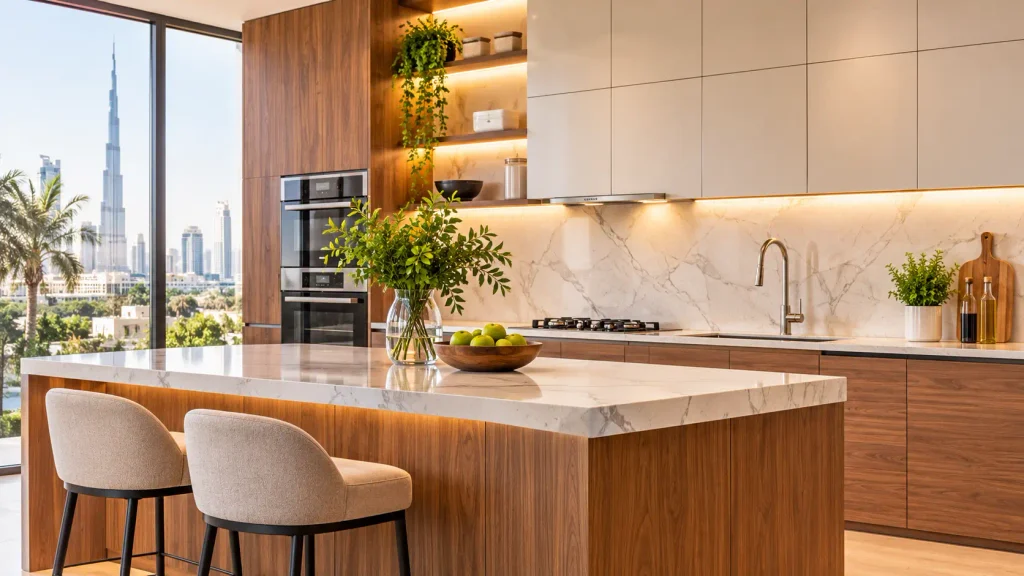
The kitchen is used every day, so its materials should handle regular cooking, cleaning, and storage. Cheap cabinet hinges, drawer systems, and countertops will not last long enough.
Choose high-quality cabinets, durable hardware, and a countertop that meets your cooking style. It doesn’t have to be the most expensive type of stone; the most important thing is for it to be practical, convenient to maintain, and good for your budget.
Moreover, many homeowners in Dubai are looking for warmer wood finishes and natural looks, as well as improved storage solutions.
3. Custom Storage and Joinery
Storage and joinery are essential for a home. Wardrobes in bedrooms, cabinets in the kitchen, a TV unit, and other storage spaces help keep the home clean and neat. Choosing the best interior design company matters; low-quality materials won’t last long. With accurate measurements and proper installation, the final output will look even better.
4. Flooring in High-Traffic Areas
Flooring in living rooms, hallways, kitchens, and entrance areas experiences regular foot traffic. Choosing a durable material can reduce the need for early replacement.
Porcelain tiles are one option worth considering because they are available in different finishes and are relatively easy to maintain. Natural stone may suit certain interiors, but it usually requires more consideration in terms of maintenance and cost.
Choose flooring based on how the space is used, not only how it looks in a showroom.
Where Can You Save Money?
1. Choose Affordable Alternatives for Decorative Finishes
Not every surface needs a premium material. For example, porcelain tiles with a marble-inspired finish can create a similar visual effect without the cost and maintenance requirements of some natural stones.
You can also use decorative wall finishes selectively. Instead of covering every wall with expensive panels or textured materials, choose one feature wall in the living room or bedroom.
This keeps the design interesting while leaving more of the budget for essential work.
2. Keep the Existing Layout Where Possible
Changing the position of kitchens, bathrooms, sinks, and drainage points can increase the amount of plumbing and civil work required.
If the existing layout is functional, keeping major service points in place may be a sensible way to control costs. You can still improve the appearance with new cabinets, lighting, countertops, and fixtures.
A 2026 Dubai renovation cost guide also identifies the existing layout and the amount of electrical, plumbing, and air-conditioning work as important cost factors.
3. Avoid Unnecessary Customisation
Custom furniture can be useful when standard sizes do not suit your space. However, not every cabinet, shelf, or storage unit needs a completely individual design.
Use standard cabinet dimensions where they fit properly. Save custom joinery for areas where it solves a genuine space or storage problem.
You can also reduce costs by choosing simple handles, standard hardware finishes, and practical internal fittings instead of adding decorative features throughout the home.
4. Plan Decorative Upgrades in Stages
If your budget is limited, focus on essential renovation work first. Decorative upgrades such as artwork, loose furniture, feature lighting, and accessories can often be added later.
For example, you can complete the kitchen, bathroom, flooring, and painting now, then update bedroom furniture or decorative wall panels at a later stage.
Just make sure the overall design is planned in advance so that future additions match the completed interiors.
A Simple Renovation Budget Guide
| Renovation area | Where to spend | Where to save |
| Kitchen | Cabinet hardware and worktop quality | Decorative finishes |
| Bathroom | Waterproofing and plumbing | Premium accessories |
| Flooring | Durable materials and installation | Expensive patterns |
| Wardrobes | Strong construction and fittings | Unnecessary detailing |
| Lighting | Safe wiring and practical placement | Excessive decorative fixtures |
| Living areas | Good-quality paint and finishes | Trend-based wall treatments |
Common Budget Mistakes to Avoid
One common mistake is starting work without a clear renovation scope. When homeowners keep changing materials, layouts, or requirements during construction, the project can become more expensive and take longer.
Another mistake is choosing a contractor based only on the lowest quotation. A lower price may exclude important work such as disposal, electrical adjustments, installation, or finishing.
Before approving a quote, check the materials, quantities, labour, exclusions, payment stages, and expected timeline. Keep some money aside for unexpected repairs, particularly when renovating older properties.
Final Thoughts
A successful home renovation in Dubai is not about spending the most money. It is about spending it in the right places. Invest in plumbing, electrical work, waterproofing, durable materials, and useful storage. Save on decorative details, unnecessary customisation, and changes that do not improve the way you use your home.
At KitchenScape, homeowners can get support with complete home renovations, kitchens, bathrooms, custom wardrobes, joinery, flooring, lighting, and finishing work. The team manages different stages of renovation, from consultation and design planning to execution and final handover.
Before starting your project, take time to understand your priorities and set a realistic budget. A well-planned renovation can make your home more comfortable and functional without spending money on changes you do not really need.